
Why a First Garment Sample May Not Fit
Use fabric, fit-model and pattern evidence to turn first-sample issues into actionable revisions.
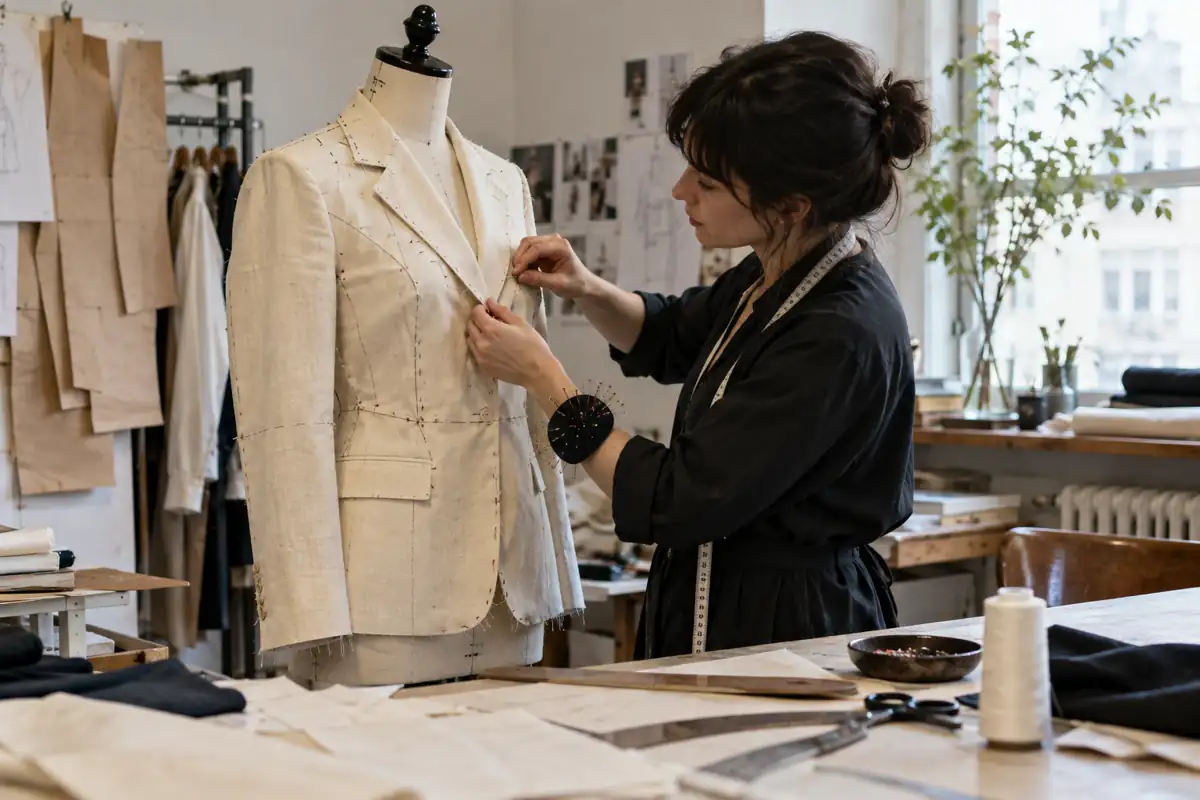
A first sample makes assumptions visible
It turns a design into something the team can wear and measure. Tight shoulders, poor length or a pinching waist may reveal information lost in the specification.
The base size may not reflect the target wearer
Brand measurements, the factory's base block and the fit model need to align. Every specified number can be correct while the garment still feels different.
Flat measurements do not describe posture
Equal chest circumferences can conceal differences in posture, shoulder slope and back depth. Identify these characteristics in the tech pack.
Fabric changes how a pattern behaves
Stretch, thickness, drape and shrinkage matter. Distinguish pattern problems from differences introduced by substitute cloth.
Describe what you observe
Replace “looks wrong” with details such as a one-centimeter collar gap or drag lines at the right shoulder. Include front, side and rear views in a natural stance.
Do not change everything in one round
A simultaneous change to shoulders, chest, length and lapels makes it hard to identify the effective adjustment. Prioritize construction before cosmetic details.
Link fitting notes to likely causes
Target body, fabric and pattern interact. Use comparable tests to isolate a cause before committing to a change.
Repeat the fitting conditions
Use the same fit model and movements and check how the sample looks and feels under consistent conditions.
Use the sample to improve the next conversation
Agree the measurement method, model and feedback terms. Revisions are expected; unsupported revisions are the avoidable risk.
OEM vs. ODM: Which Apparel Manufacturing Model Fits Your Brand? →