
How to Read a Suiting Fabric Swatch Card
Understand fabric composition, weight, weave, width and dye-lot information before approving a suiting material.
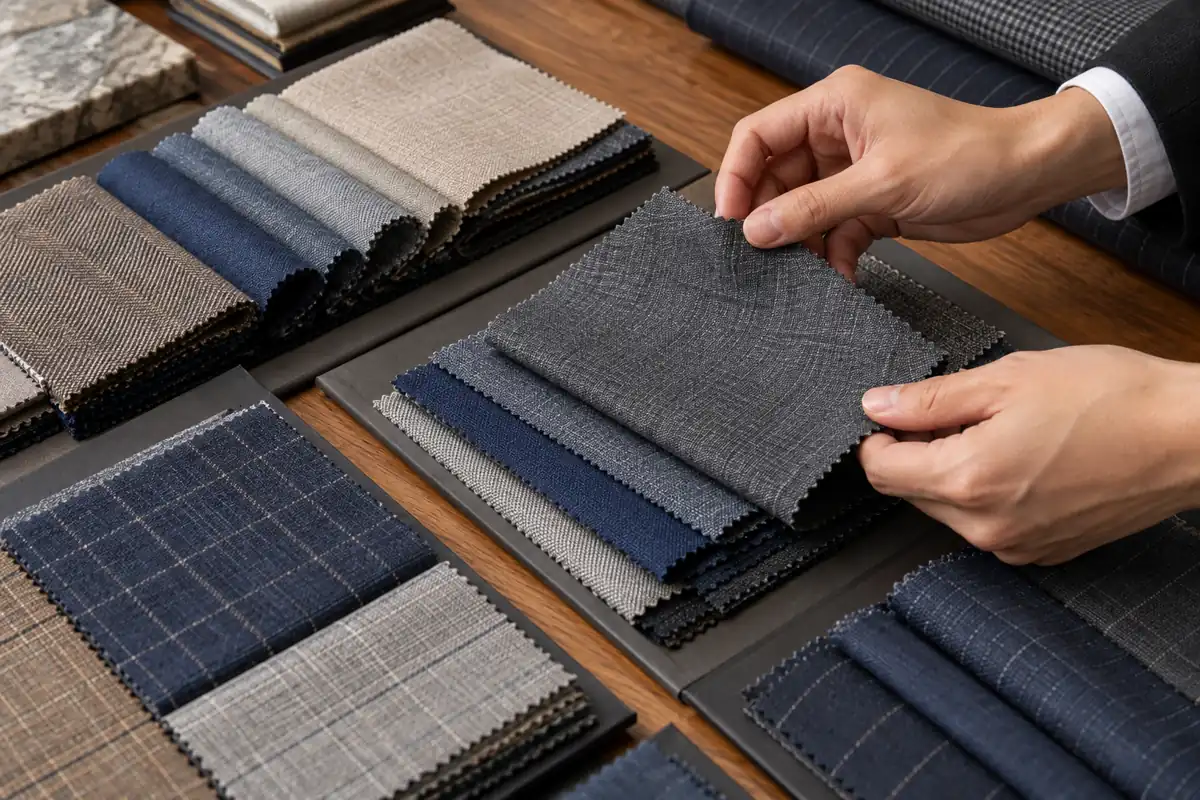
Read more than color and hand
A small swatch can state fiber content, weight, weave, width and care. These details help flag opacity, creasing, weight and reorder risks before making a garment.
Fiber content gives an indication
Wool offers recovery and moisture regulation; polyester may improve abrasion resistance and stability; viscose adds drape and elastane stretch. Yarn and construction can change performance at the same blend ratio.
Check how fabric weight is reported
Grams per square meter and grams per linear meter are not directly comparable without width. Airflow also depends on weave and density.
Weave and finish affect appearance
Plain weave can be simple and stable; twill has direction and may show sheen; serge is close-woven; brushed flannel feels warmer. Inspect the texture close up and the shade from a distance.
Check the production dye lot
Swatch-card shade is a reference. If a repeat order uses a new batch, confirm the shade instead of assuming the same code guarantees a match.
Use handling as an initial screen
Squeeze and release to see recovery, try light and dark backgrounds for opacity, and feel stretch in both directions. Use test data for formal decisions.
Read the fields together
Content, weight, weave and handling indicate different things. Compare them against the garment's intended use.
Confirm with a garment sample
Check line, feel and movement on the intended wearer and in the expected setting before approving the cloth.
Use the card to ask better questions
A card is not a miniature garment. Use the shade, composition, construction and lot information to inform sampling.
OEM vs. ODM: Which Apparel Manufacturing Model Fits Your Brand? →