
Women's Blazer Proportions: Length, Lapel Width and Button Position
Assess how jacket length, lapel width, closure and shoulder shape work with the complete outfit.
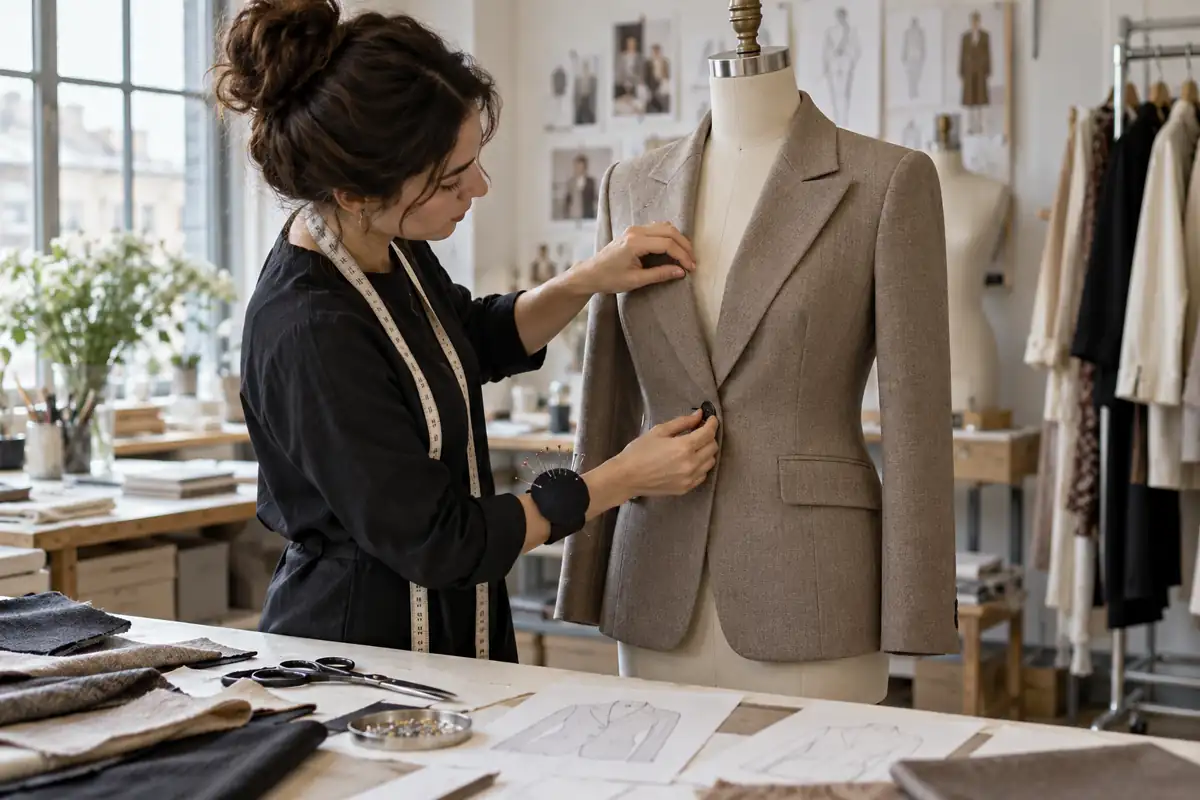
Small changes can shift the whole look
Moving the hem by two centimeters or raising the button can change how modern or structured the same cloth appears.
Length changes the visual division of the body
Cropped styles emphasize the waist and can lengthen the appearance of the legs. Hip length works for commuting; longer styles create a vertical line. Consider height, bottoms and occasion together.
Lapel width shifts visual weight
Narrow lapels look light and sharp. Wider ones create presence and can balance broad shoulders. The lapel point guides the eye up or out.
Button position sets a visual waist
A button near the natural waist creates definition; a lower position visually lengthens the torso. Decide with the dart, pockets and front opening.
The shoulder changes the level of structure
Thin pads preserve a natural line, sharper shoulders suggest formality and dropped shoulders read like outerwear. Adjust armholes and chest when width changes.
Bottoms complete the proportions
High-waisted trousers, straight skirts and fuller skirts place visual weight differently. A jacket-only form can hide the balance of a complete outfit.
Look beyond measurements
Review length, button and outfit together, then test whether they deliver the same impression on the intended wearer and under actual conditions.
Let the wearer confirm the decision
Compare movement, feel and appearance in the complete outfit rather than relying on a single measurement.
Keep the proportions working together
There is no universal formula. Hem, lapel, button and shoulder should all support the same design intent.
How Architecture Inspires Tailoring, From Rooflines to Jacket Shoulders →