
Why Worsted Wool Is a Classic Business Suit Fabric
See how combed fibers, yarn, weave and finishing give worsted wool its useful balance for business tailoring.
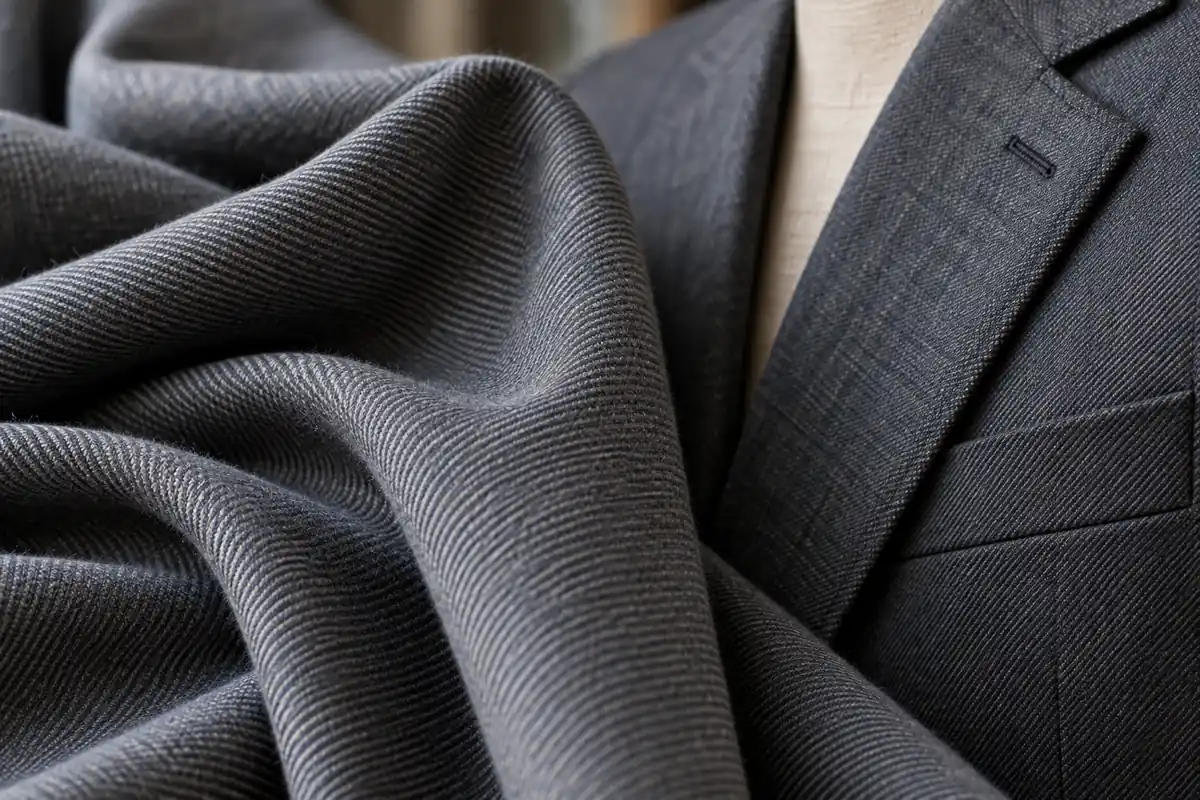
Performance comes from its construction
Worsted can combine a crisp shape, recovery, airflow and a fine surface. Fiber selection, combing, spinning and weaving all contribute.
Long, aligned fibers produce a smoother surface
Combing removes shorter fibers and aligns the longer ones for a compact, smooth yarn. The result usually has a clearer outline and less surface fuzz than woolen cloth.
Natural crimp helps recovery
Wool's crimp traps pockets of air and helps fibers respond after compression. Light sitting creases may ease after hanging the garment.
Moisture absorption is only one factor in comfort
Wool can absorb water vapor before feeling wet. Weight, density and how open the weave is still determine how cool a cloth feels.
Fineness is one metric
Finer yarn can feel smoother but may require more care. For frequent wear, balance touch, abrasion and maintenance before pursuing a higher number.
Finishing changes the final hand
Decatizing, shearing and setting can alter sheen, flatness and drape. The same fiber content does not guarantee the same result.
Compare the finished cloth
Consider fiber, yarn, weave and treatment together, in the conditions the suit will face.
Check appearance, touch and movement
Look at the full silhouette, inspect the surface up close and see how the jacket behaves when you sit, reach and walk.
Value the balance of properties
Worsted remains useful because it balances a professional appearance, comfort and the ability to take shape.
How Natural Crinkle and Texture Work in Modern Tailoring →