
What Creates Sheen in Suiting Fabrics?
Understand where a fabric’s lustre comes from and distinguish an intended finish from wear or pressing marks.
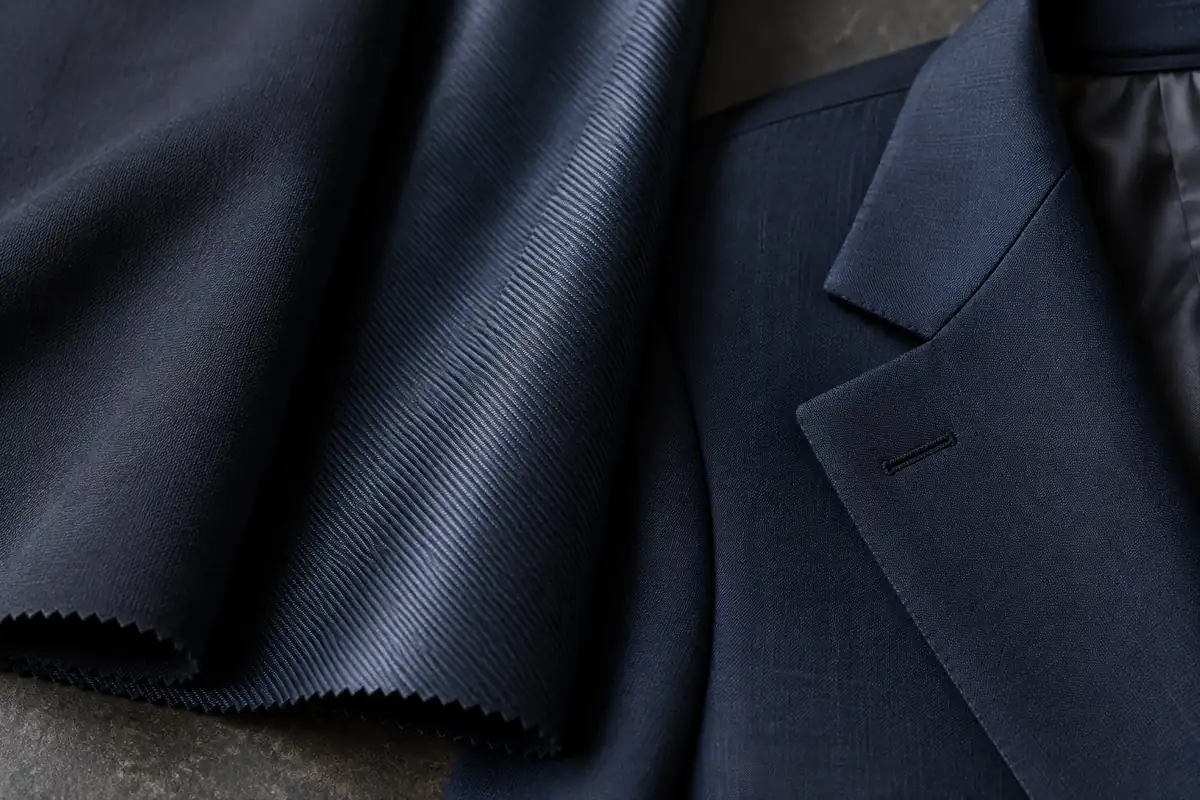
Identify the source of the shine
Some suits have a soft lustre, others are matte, and others shine at elbows or seat after wear. Distinguish a designed finish from wear or pressing marks.
Fiber surfaces change reflection
Smooth, long fibers tend to reflect directionally, while fuzz scatters light for a softer appearance.
Yarn twist alters surface character
Firm, high-twist yarns can produce a clean surface. Bulkier yarns contain more air and visible fibers and often look matte.
Weave directs the light
Twill has a directional effect that changes with movement. Longer satin floats reflect light more continuously and often look shinier.
Finishing can enhance or soften lustre
Calendering can increase sheen, raising the surface scatters light, and coatings can change both hand and reflection. Choose a finish suited to use.
Local shine often follows pressure or friction
Elbows, seat and pocket edges can become polished over time. Incorrect hot pressing can leave a similar patch.
Check cloth and wear patterns together
Examine fibers, yarn and weave before attributing a reflective area to a defect or styling choice.
Observe the cloth in changing conditions
Look at material and fit in actual wear. Reflection that appears only at one angle can be missed by an isolated still.
Tilt the cloth before judging
Intended lustre generally shifts with movement. Compare angles and use a physical swatch rather than relying on a single picture.
Why Worsted Wool Is a Classic Business Suit Fabric →