
Why Suit Lapels Roll Naturally: The Hidden Structure
See how chest support, pad stitching, collar fit and pressing work together to create a natural lapel roll.
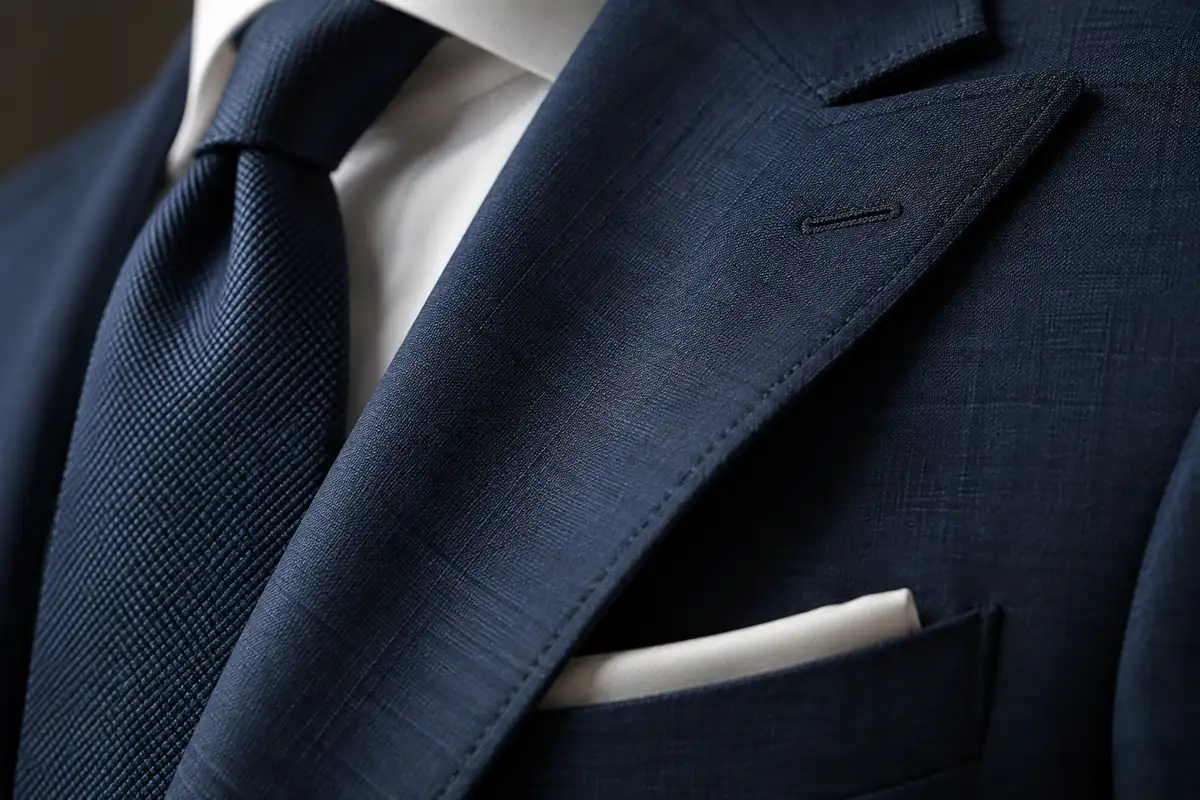
A good lapel forms a continuous curve
A well-made lapel neither folds stiffly like paper nor collapses onto the chest. Cloth, interlining, stitches and pressing create a roll rising from the button area.
The chest canvas provides support
Traditional canvas uses fibers such as wool and cotton and can flex with the garment. Fusible interlining can offer repeatability, but its stiffness and bonding conditions must suit the shell.
Pad stitching gives the roll a shape
Small stitches join shell and interlining and encourage curvature as the layers are shaped. The stitches stay largely hidden from the face.
The roll line can vary
A two-button suit usually begins to roll near the upper button; three-button styles can be built differently. Design determines the starting point and materials influence the curve.
The collar and lapel work together
A tight undercollar can pull the lapel up and a loose one can stand away from the neck. Check collar, gorge and lapel as a system.
Pressing supports the structure
Heavy pressure can make a hard crease that loses depth in wear. Press according to the shape built into the garment.
Consider the whole front
Chest support, roll point and pressing should be checked together on the chosen fabric.
Compare on a wearer
Change posture and viewing angle, then see whether the roll settles again after the jacket moves.
Aim for controlled softness
A natural roll needs enough support to hold its outline and enough flexibility to move.
Why Pockets Are the Hardest Place to Match Stripes on a Suit →