
How a Private-Label Menswear Brand Can Develop Its First Signature Suit
Build a recognizable private-label suit around the intended wearer, a distinctive cut and repeatable details.
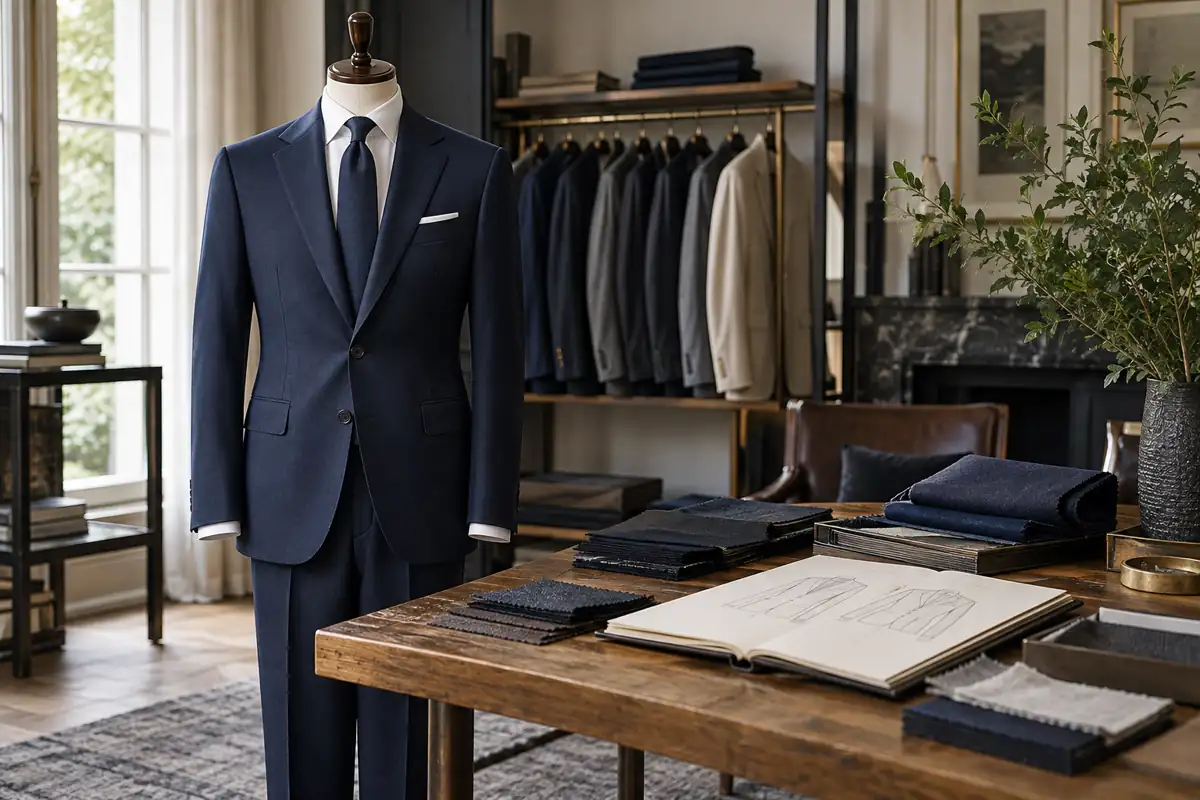
Start with one recognizable garment
A first collection can contain many similar styles and still leave no memorable impression. A signature suit needs a recognizable cut, color and set of details.
Identify the wearer and the occasion
Travel, daily commuting and formal occasions tell you more than age alone. They influence cloth weight, ease, pockets and care.
Describe the silhouette in one sentence
Slightly extended shoulders, a soft chest, a longer body or a more defined waist can anchor the design. Concentrate on one or two proportions.
Let color support the brand
Navy is understated, charcoal feels composed and warm brown reads more casually. Coordinate the first color with the customer, photography, packaging and online visuals.
Make the details work at close range
Button material, lapel width, pockets and lining register during fitting and handling. Restrained details put more emphasis on accurate proportions.
Build recognition through repetition
Keep the signature cut in circulation while developing seasonal fabrics and styling. Repeated contact helps buyers recognize it.
Judge the signature in use
Consider wearer, color and repeated use together. Check fit and details under the actual conditions rather than treating the visual idea as a fixed rule.
Try it from three distances
Look at the silhouette, inspect materials nearby, then test sitting, reaching and walking to see how the shape behaves.
What makes the design last
The suit should serve a clear wearer and occasion and retain a familiar foundation after updates.
How Buttons and Trims Give a Suit a Brand Identity →