How Buttons and Trims Give a Suit a Brand Identity
See how horn, corozo and metal buttons affect a jacket’s formality, finish and brand identity.
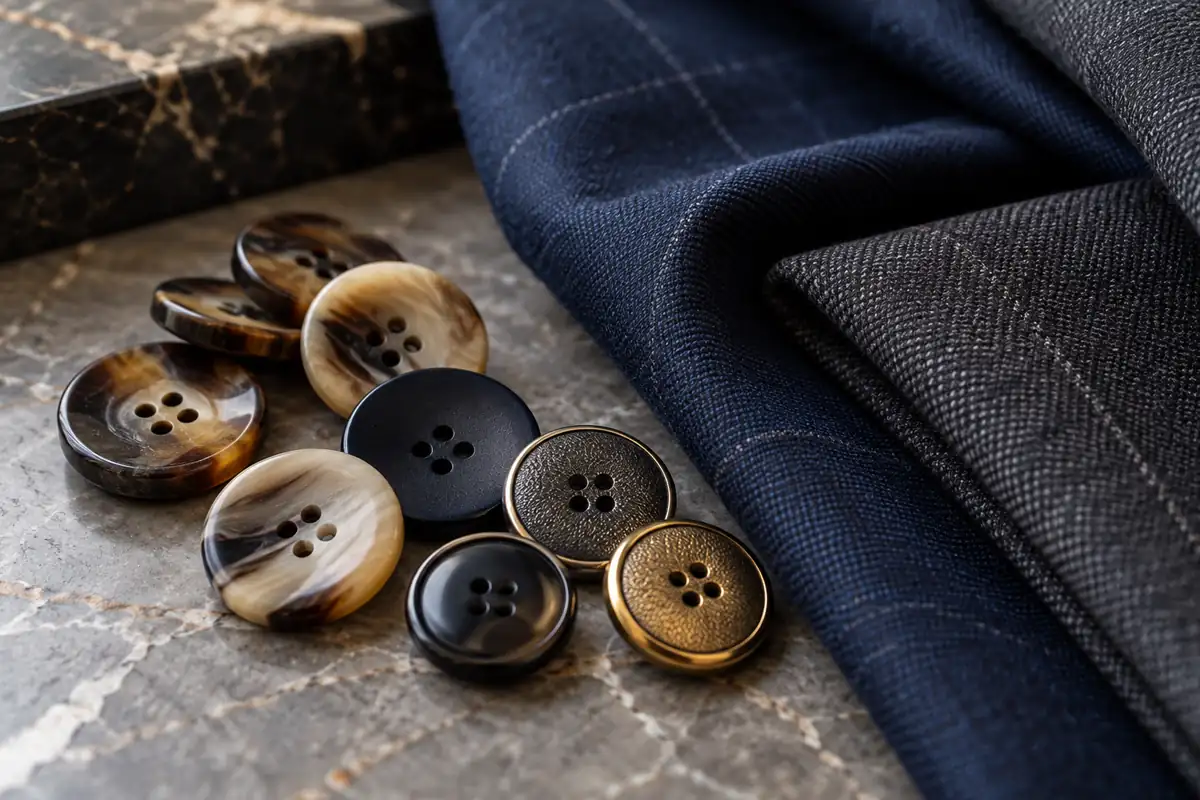
A small detail with an outsized effect
Buttons sit where people look and touch. Color, sheen, thickness and edge finish change perceived formality and quality.
The variation in genuine horn
Each horn button has subtle differences. Select an acceptable shade range so variation still looks deliberate on one garment.
The softer finish of corozo
This nut-based material takes dye with a subdued finish and works well with linen, cotton and wool blends in relaxed businesswear.
When to use metal buttons
Metal can give navy tailoring a collegiate, uniform or ceremonial character. Keep motifs, plating and weight in balance with the cloth and silhouette.
Match undertones rather than exact shades
A darker button can look more formal and a lighter one more casual. Check undertones; a yellow-leaning button can clash with a cool gray cloth.
Check the back and the buttonhole
Shank height affects how the jacket sits when fastened. Buttonhole thread and spare-button packaging also shape the experience.
Review trims on the whole jacket
Compare material, placement and function together. What suits one cloth, wearer or setting may not suit another.
Compare in actual use
Look in different lighting, try fastening in different postures and handle the garment before deciding.
What a good trim communicates
When the button fits the fabric, shape and occasion, it becomes a quiet, recognizable detail that customers touch often.
How a Private-Label Menswear Brand Can Develop Its First Signature Suit →