
Why the Fastest Cycle Is a Poor Basis for a Delivery Date
Observe comparable operations under normal conditions and separate routine cycle times from interruptions.
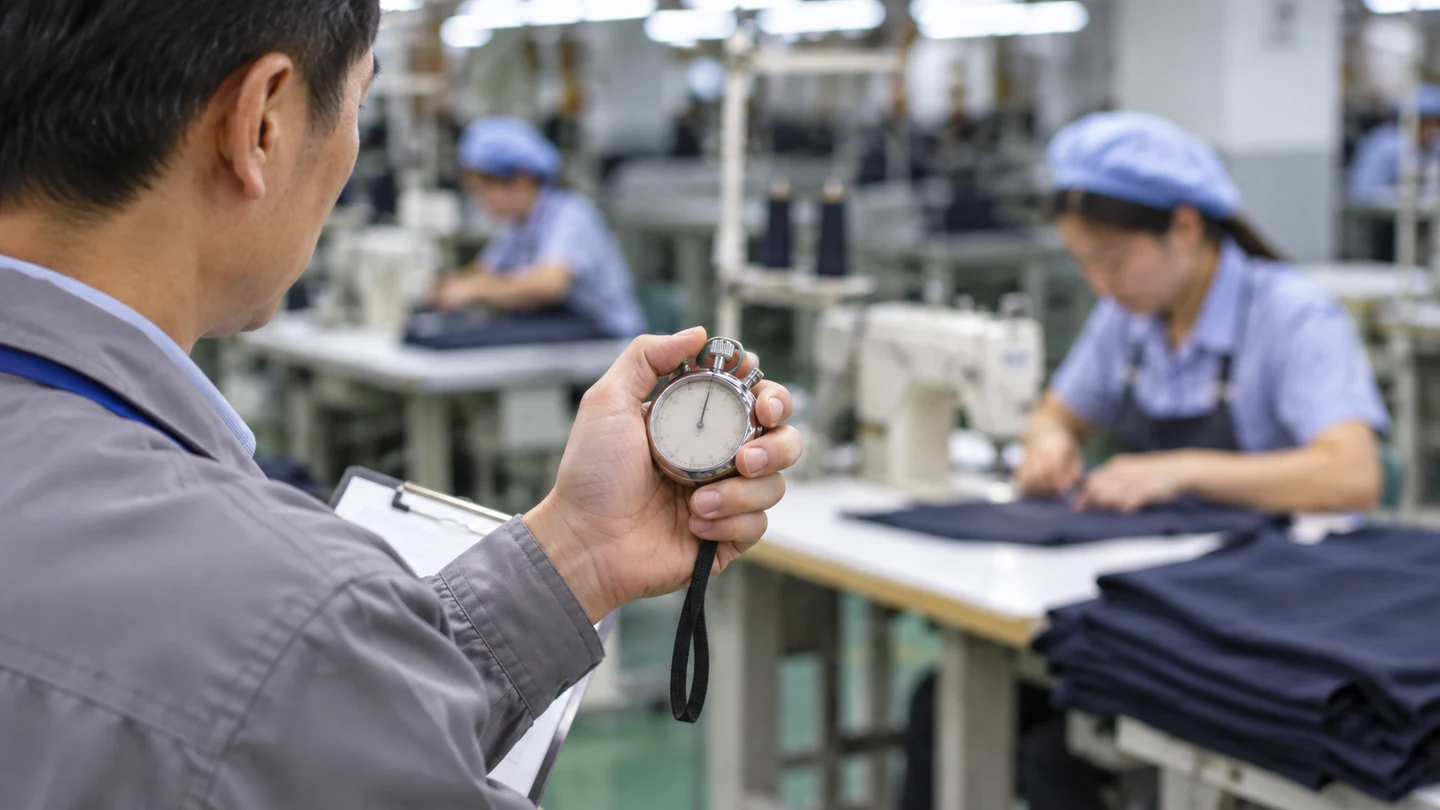
The smoothest cycle on a new style may be unusually quick. A schedule based on that single run can omit time spent changing materials, positioning parts or waiting for the previous operation. The aim of timing is to establish a range the planning team can explain.
Measure between consistent points
For a pocket operation, agree when timing starts and ends, such as picking up fabric and handing over the finished part. Note whether picking up trims, laying out parts and self-inspection are included. Log temporary interruptions separately so a material shortage is not mistaken for slow sewing.
Use the findings to plan the work
Use a verified normal range, allowing for style differences, staffing and material readiness. When a station appears slow, compare work conditions before drawing conclusions from samples of different difficulty or preparation.
The record should show a buyer what must be ready early and where the schedule could still change.
Why Check a Women's Trouser Waistband While Seated? →
Tucked or Untucked? Design the Shirt Hem for the Way It Will Be Worn →