
How to Select Suit Fabrics for Tropical, Temperate and Cold Markets
Choose suiting for airflow, layering and care according to how customers actually wear it in each market.
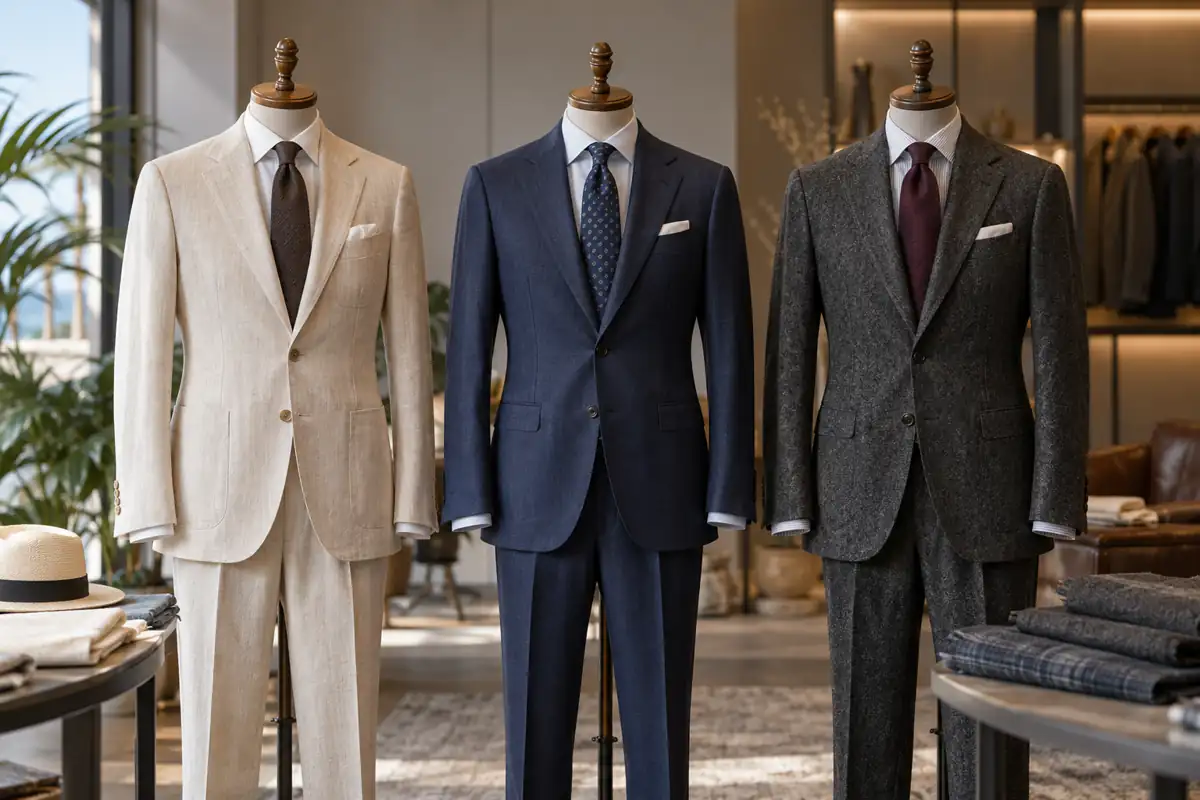
Start from the wearer's day
Temperature is only one factor. Humidity, air conditioning, transport and dress conventions also shape the choice. Design for actual wear rather than a country label.
Hot, humid settings need airflow
Consider high-twist wool, open weaves, lighter cloth and partial lining. Going too light can make cloth see-through or compromise drape.
Temperate markets need versatility
Midweight worsted can cover more of the year and work with indoor cooling or layers. Navy, gray and restrained patterns suit both commuting and more formal use.
Cold markets need warmth and room for layers
Flannel, woolen fabrics and denser weaves feel warm, but heated rooms argue against excessive weight. Allow for layering and consider lining slip and shoulder or chest structure.
Rain and wind change what matters
Wet or coastal markets may value drying, crease recovery or water repellency. Assess finishes without losing the look and feel expected of a suit.
Account for local preferences
Markets vary in fit, fiber labeling and care priorities. Climate data cannot substitute for observing buyers.
Review the trade-offs together
Compare ventilation, warmth, use and care instead of making a choice from fiber name or climate alone.
Test sample fabrics in realistic settings
Look at shade in different light, compare cloth on the wearer in motion and see how it feels and hangs.
Fit the whole day
Good market fit balances outdoor travel, vehicles, offices and care. That is more informative than annual average temperature.
How to Read a Garment Packing List: Key Fields for Importers →